
Retinol has spent years as skincare’s most famous slow-burn ingredient. Retinal—often written as retinaldehyde—has arrived with a sharper promise: similar Vitamin A benefits, but one biochemical step closer to the form skin can actually use.
That sounds like an automatic upgrade. In practice, the better choice depends on more than the name on the bottle. Concentration, delivery system, supporting ingredients and your skin’s tolerance all shape the result. A sophisticated retinol serum can be a wiser first step than an ambitious retinal treatment; a carefully encapsulated retinal formula can feel surprisingly elegant on experienced skin.
The useful question is not simply, “Which one is stronger?” It is: which form gives your skin the best chance of staying consistent?
Retinal and retinol belong to the same family
Both ingredients are cosmetic retinoids—Vitamin A derivatives used to support smoother texture, more even-looking tone, firmer-looking skin and clearer pores. Once applied, they travel through a conversion pathway before becoming retinoic acid, the biologically active form that interacts with skin cells.
The simplified pathway looks like this:
Retinol → retinal → retinoic acid
Retinol needs two conversion steps. Retinal needs one. That is why retinal is generally described as faster-acting and more potent at comparable use levels. But “one step closer” does not guarantee that every retinal product will outperform every retinol product. Formula stability, packaging, concentration and how often you can comfortably apply it matter enormously.
Retinal also has an interesting place in blemish-focused routines because it has been studied for antibacterial activity. Still, neither ingredient should be treated as an overnight acne cure. Think in months, not mornings.
Retinal: the focused, faster lane
Retinal suits people who already understand their tolerance and want a more direct Vitamin A treatment for fine lines, loss of bounce or stubborn texture. Modern Korean formulas often soften its edges with liposomes, humectants, peptides or nourishing extracts.
Beauty of Joseon Revive Eye Serum: Ginseng + Retinal is a graceful introduction to the category. The texture has the slip of a light serum rather than a dense eye cream, while ginseng extract and retinal liposomes make it feel considered rather than aggressive. Although it is marketed for the eye area, many users appreciate this style of targeted, cushiony retinal care for expression lines.
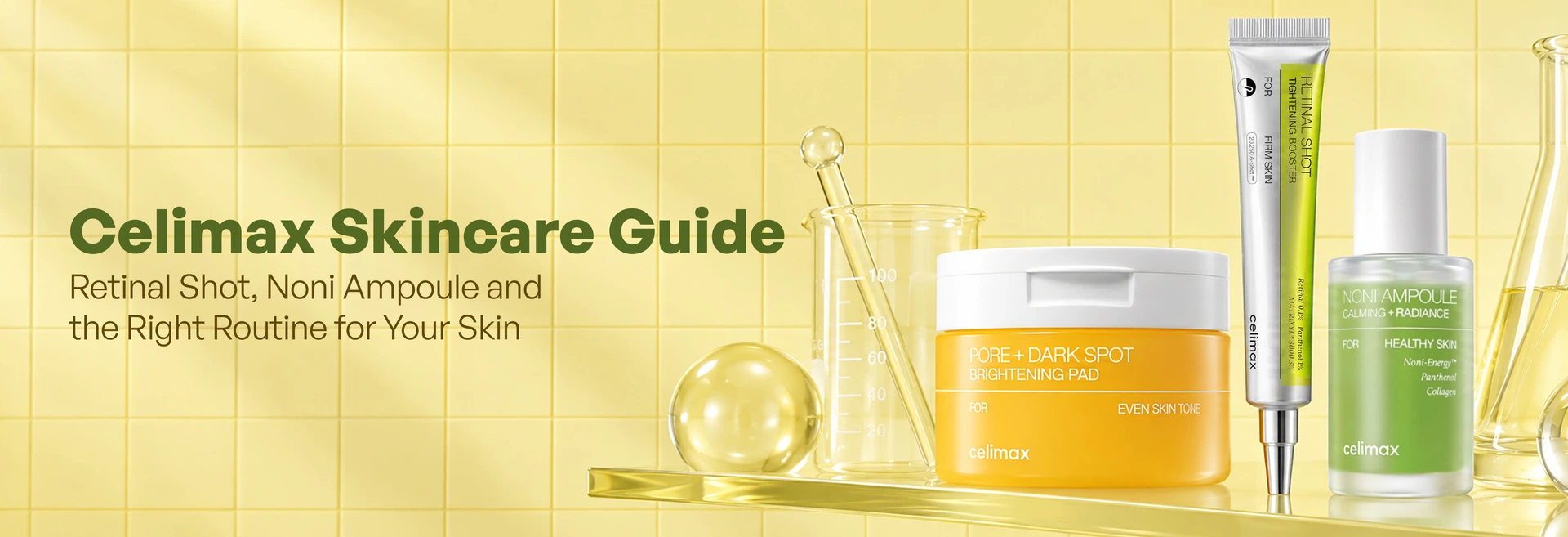
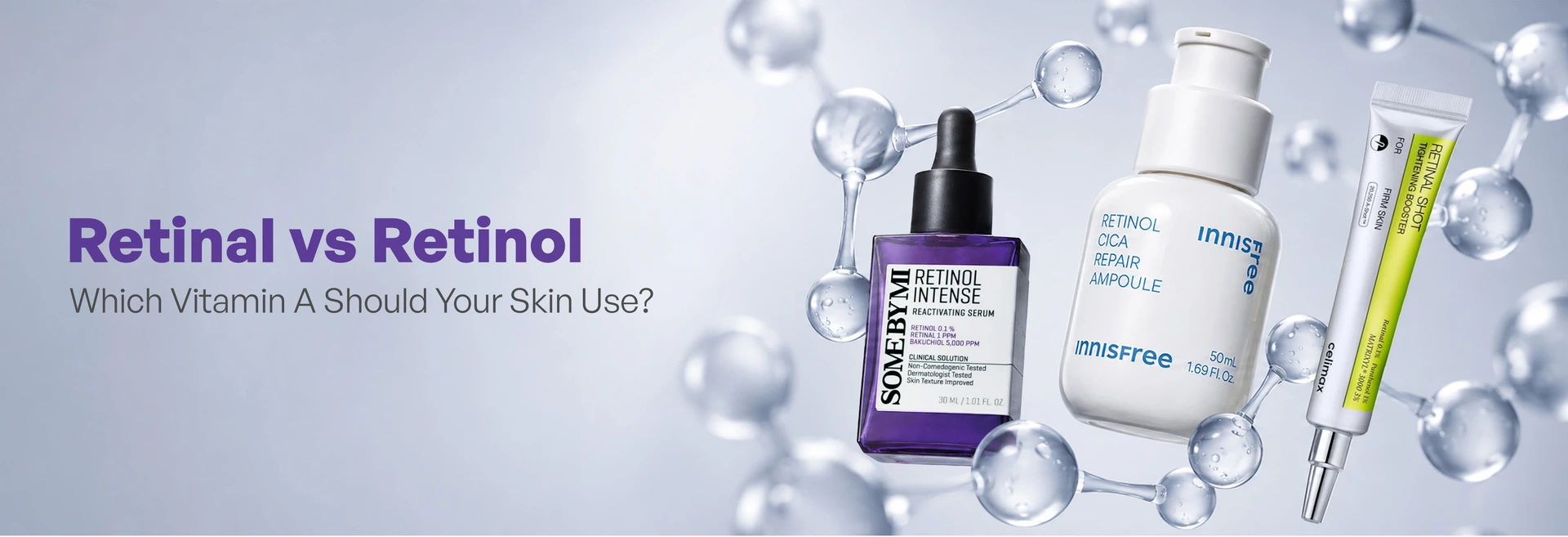
celimax The Vita A Retinal Shot Tightening Booster moves into more concentrated territory with 0.1% retinal. Its golden, nutrient-rich formula is designed for firmness and pore-focused care, making it better suited to someone ready to treat retinal as the active centrepiece of an evening routine—not an ingredient to layer casually with everything else.
Retinal is not automatically harsh, but it deserves respect. If you are moving up from retinol, begin with two nights a week, keep the rest of the routine quiet and judge comfort over several weeks.
Retinol: the versatile, well-mapped classic
Retinol remains the most flexible place to begin because it appears in everything from watery ampoules to rich creams and silky oils. That variety makes it easier to match the vehicle to your skin type.
For blemish-prone or easily unsettled skin, INNISFREE Retinol Cica Repair Ampoule pairs retinol with cica, hyaluronic acid, ceramides and salicylic acid in a quick-absorbing water-based formula. It is a practical example of Korean formulation philosophy: the active does not work alone; soothing and barrier-supportive ingredients are built into the experience.
PURITO Seoul Timeless Bloom Retinol Spot Cream takes a more localised approach. With 0.1% retinol, bakuchiol and hydrating support, it is an approachable option for first-time users who would rather dab a cream onto areas of concern than commit their entire face to a full-strength serum.
For users ready for a more assertive retinol step, Anua Nano Retinol 0.3% + Niacin Renewing Serum combines encapsulated retinol with niacinamide, ceramides, peptides, hyaluronic acid and squalane. The goal is not only wrinkle care; it also targets the look of pores, uneven texture and resilience.
Isntree Hyper Retinol EX 1.0 Serum sounds intimidating, but the “1.0” refers to its broader Retinol EX complex rather than 1% pure retinol. The formula combines 0.1% retinol, 0.3% retinyl palmitate and 0.6% bakuchiol, supported by peptides and a generous ceramide system. It is a milky, barrier-conscious option for someone who wants multiple Vitamin A-adjacent strategies in one serum.
At the richer end, COSRX The Retinol 0.5 Oil suspends 0.5% pure retinol in a silky blend with squalane and Vitamin E. It makes sense for experienced users whose skin prefers nourishment, especially when dryness is the first sign that a routine is becoming too ambitious.
The bridge formula: when a product uses both
The retinal-versus-retinol divide is not always neat. SOME BY MI Retinol Intense Reactivating Serum combines retinol, retinal and bakuchiol in one formula, then cushions the blend with cica, ceramide, panthenol and fermented ingredients. This hybrid approach is useful for someone who wants a more layered Vitamin A formula without jumping straight to a standalone high-strength retinal product.
Its moisturising, non-sticky finish also illustrates an important point: ingredient lists tell you what is present, but texture often decides whether a product becomes part of your life.
Retinal vs retinol at a glance
| If your priority is… | Consider… | Why |
|---|---|---|
| A first Vitamin A routine | Retinol | More formula choices and an easier path to gradual use |
| Fine lines with an experienced routine | Retinal | One conversion step closer to retinoic acid |
| Easily irritated or dehydrated skin | A low-strength retinol in a soothing base | Tolerance matters more than theoretical speed |
| Pore and firmness-focused care | Either, depending on formula | Niacinamide, peptides and barrier support can meaningfully shape the experience |
| A targeted eye treatment | Encapsulated retinal | Elegant, focused formulas are widely available |
| Dry skin that already tolerates retinoids | Retinol in a cream or oil | A richer vehicle can reduce the tight, papery feeling of overuse |
How to introduce either ingredient without wrecking your barrier
Start on clean, fully dry skin at night. Damp skin can increase penetration and may make a retinoid feel more intense. Use a pea-sized amount for the face, avoiding the corners of the nose, lips and eyes unless the product is specifically designed for those areas.
Begin once or twice a week. If your skin remains comfortable—no persistent burning, swelling or raw patches—move to every third night, then alternate nights if needed. Daily use is not a trophy. A calm three-night-a-week routine will usually serve you better than a nightly routine you abandon after ten days.
A plain moisturiser can be applied before and after the retinoid as a “sandwich” for extra buffering. On retinoid nights, avoid stacking strong exfoliating acids, abrasive scrubs or another Vitamin A product. Benzoyl peroxide and prescription treatments deserve personalised guidance from a dermatologist or pharmacist.
And sunscreen is non-negotiable. Use broad-spectrum SPF 30 or higher every morning, apply enough, and reapply when exposure demands it. Retinoids are a long-term investment; unprotected UV exposure works against the same concerns you are trying to improve.
Pregnant or breastfeeding people should consult a qualified healthcare professional and generally avoid topical retinoids unless specifically advised otherwise. Anyone managing eczema, rosacea, a compromised barrier or prescription acne treatment should seek professional guidance before starting.
The verdict
Choose retinol if you are new to Vitamin A, want more control over texture and strength, or need a formula that puts soothing and moisturising support first. Choose retinal if your skin already tolerates retinoids and you want a more direct, focused step for fine lines, firmness or stubborn texture.
Neither wins by being stronger on paper. The best formula is the one you can use slowly, comfortably and consistently—while protecting your skin every morning. In a category obsessed with speed, patience remains the most effective active of all.